
This article provides general educational information about types of cancer treatment and is not a substitute for professional medical advice, diagnosis, or treatment. Treatment decisions should always be made with your oncology care team. If you have a medical emergency, call 911. QuickRx Specialty Pharmacy does not provide medical diagnosis or treatment recommendations.
✓ Medically Reviewed by: Julia Kravtsova, PharmD
Head Patient Navigator, QuickRx Specialty Pharmacy
Licensed in all 50 states | Specialty pharmacy expert
Last Updated: Aug 2026
Key Takeaways
- Chemo is not the only option: the National Cancer Institute lists several main types of cancer treatment, including surgery, radiation therapy, immunotherapy, targeted therapy, and hormone therapy.
- Targeted therapy is not chemotherapy: the NCI defines it as treatment that targets the proteins controlling how cancer cells grow, divide, and spread, while chemotherapy generally kills all rapidly dividing cells.
- Many cancer pills are targeted or hormone therapy: for example Sprycel (dasatinib) and Gleevec (imatinib) are tyrosine kinase inhibitors, and Zytiga (abiraterone) is a hormone therapy. None is traditional chemotherapy.
- Every treatment still has side effects: targeted therapies have their own side effects, which can differ from chemotherapy and can sometimes be serious. Discuss any treatment with your care team.
- Need help affording a specialty medication? Call QuickRx at (917) 830-2525.
Many people assume that a cancer diagnosis automatically means chemotherapy. It is the most well known cancer treatment, so that assumption is understandable. But it is not the whole picture. This guide explains, in plain language and with authoritative sources, the main types of cancer treatment, how targeted therapy differs from chemotherapy, and why so many modern cancer medications taken as pills are not chemo at all. It has been medically reviewed by Julia Kravtsova, PharmD.
What types of cancer treatment are there besides chemotherapy?
Besides chemotherapy, the National Cancer Institute (NCI) lists several main types of cancer treatment. These include surgery, radiation therapy, immunotherapy, targeted therapy, hormone therapy, stem cell transplant, and others. Which option or combination a person receives depends on the type of cancer, where it is, and its specific molecular features.
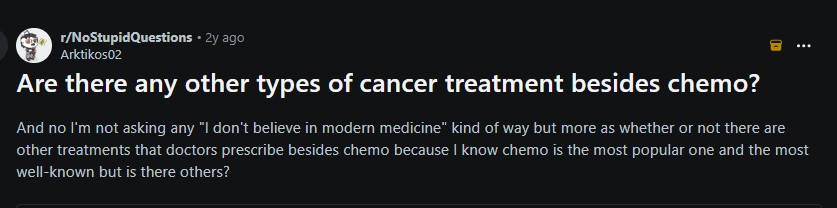
This is one of the most common questions patients and families ask. It even comes up in everyday forums: one widely read thread on Reddit’s r/NoStupidQuestions simply asked, “Are there any other types of cancer treatment besides chemo?” The short answer is yes, and the sections below explain the main ones.
Is targeted therapy the same as chemotherapy?
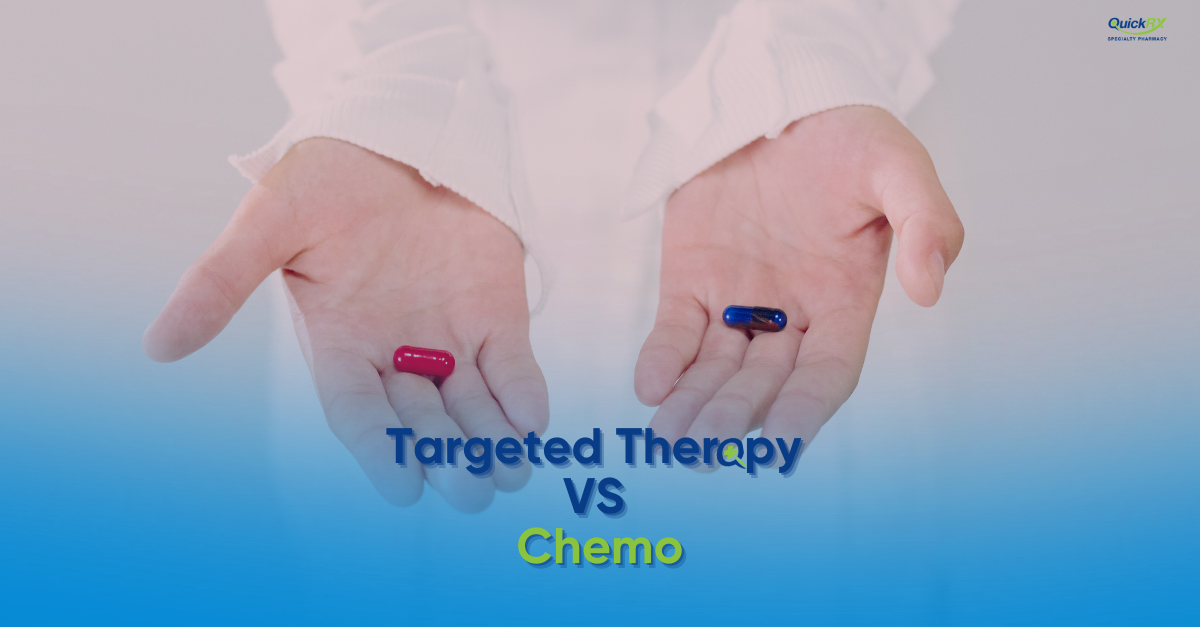
No. Targeted therapy is a distinct type of treatment. The National Cancer Institute defines targeted therapy as “a type of cancer treatment that targets proteins that control how cancer cells grow, divide, and spread.” Chemotherapy, by contrast, generally works by killing all cells that grow and divide quickly. In other words, targeted therapy aims at specific molecular features of the cancer, while chemotherapy is broader and less selective.
Because they work differently, they can also have different side effect profiles. This does not mean targeted therapy is free of side effects. Per the NCI, targeted therapies carry their own risks and side effects, which can sometimes be serious.
What are the main forms of targeted therapy?
According to the NCI, targeted therapy includes several forms. The main ones are small-molecule drugs (which include tyrosine kinase inhibitors), monoclonal antibodies, hormone therapies, and angiogenesis inhibitors. Small-molecule drugs are often the pills patients take at home, which is part of why they are sometimes mistaken for chemotherapy.
Are cancer pills like Sprycel, Gleevec, or Zytiga chemotherapy?
No. These are not traditional chemotherapy, although they are still serious prescription medications used to treat cancer.
- Sprycel (dasatinib) and Gleevec (imatinib) are tyrosine kinase inhibitors, a form of targeted therapy. Learn more in our dasatinib CML treatment guide.
- Zytiga (abiraterone) is a hormone therapy used for advanced prostate cancer, not chemotherapy. See our guide to abiraterone.
If you have been prescribed one of these and worried it meant chemotherapy, that is a very common misunderstanding. They work through the targeted and hormonal pathways described above, not by broadly attacking fast-dividing cells the way traditional chemotherapy does.
Why do new cancer treatments keep coming out?
Cancer research is highly active, and as scientists identify the specific molecular changes that drive different cancers, new targeted therapies and other treatments continue to be developed and approved. This is why patients often hear about new options arriving every few years.
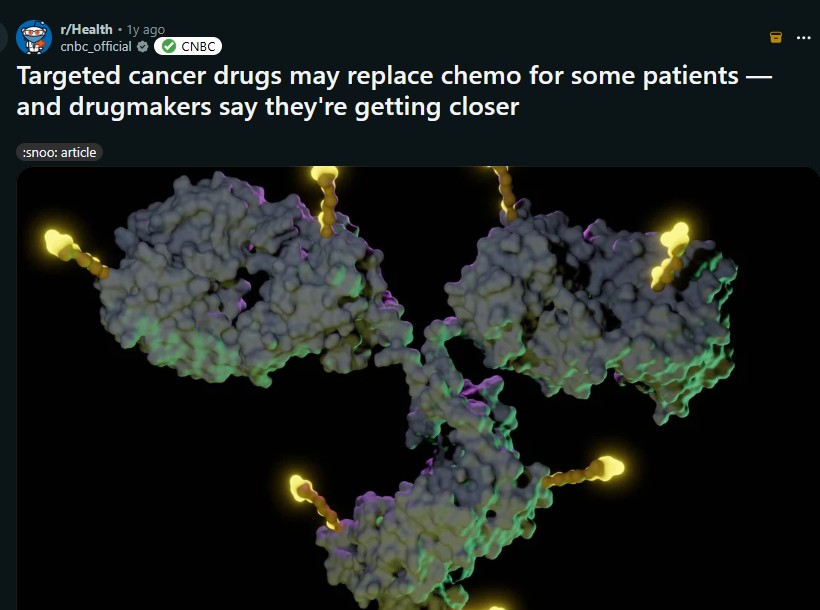
Patients notice this too. On Reddit’s r/LivingWithMBC, one member asked, “Are new treatment options really coming out every couple of years?” Coverage of the trend has reached mainstream news as well, including a widely shared article, “Targeted cancer drugs may replace chemo for some patients.” The details of any specific new drug should always be confirmed with your oncologist and against FDA prescribing information.
What real patients are asking about targeted therapy and chemo
These questions are not just search queries. They are real conversations happening in cancer communities every day. A few examples worth reading:
- r/NoStupidQuestions: “Are there any other types of cancer treatment besides chemo?”
- r/LungCancerSupport: “Targeted Therapy Versus Chemo for HER2-Mutant Lung Cancer”
- r/LivingWithMBC: “Are new treatment options really coming out every couple of years?”
- r/Health: “Targeted cancer drugs may replace chemo for some patients”
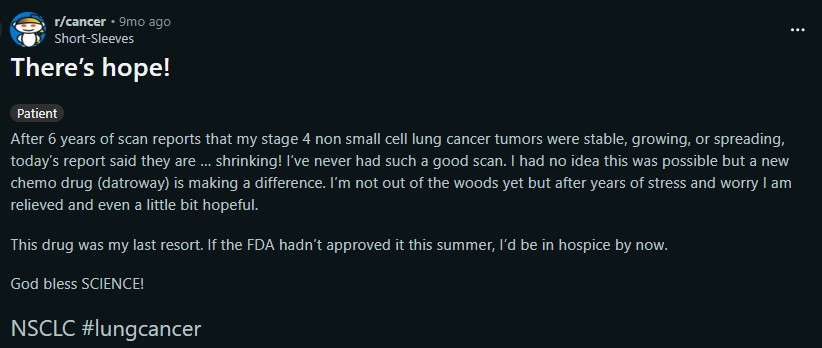
- r/cancer: “There’s hope” (a patient sharing a positive scan on a newer treatment)
The discussions above are third-party conversations hosted on Reddit. They reflect individual experiences and personal opinions, not medical advice, and QuickRx Specialty Pharmacy does not control or endorse their content. Always talk to your own care team about your treatment.
Prescribed a specialty medication and worried about the cost?
Get Help With Copay Assistance
Related Questions Patients Ask
What types of cancer treatment are there besides chemotherapy?
Besides chemotherapy, the National Cancer Institute lists several main types, including surgery, radiation therapy, immunotherapy, targeted therapy, hormone therapy, and stem cell transplant. The right choice depends on the specific cancer.
Is targeted therapy the same as chemotherapy?
No. The National Cancer Institute defines targeted therapy as treatment that targets the proteins controlling how cancer cells grow, divide, and spread, while chemotherapy generally kills all rapidly dividing cells. They work by different mechanisms.
Are cancer pills like Sprycel, Gleevec, or Zytiga chemotherapy?
No. Sprycel (dasatinib) and Gleevec (imatinib) are tyrosine kinase inhibitors, a form of targeted therapy, and Zytiga (abiraterone) is a hormone therapy. None is traditional chemotherapy, though all are serious medications used to treat cancer.
Do targeted therapies have side effects?
Yes. According to the National Cancer Institute, targeted therapies have their own side effects, which can differ from those of chemotherapy and can sometimes be serious. Any cancer treatment should be discussed with your care team.
Why do new cancer treatments keep coming out?
As researchers identify the specific molecular changes that drive different cancers, new targeted therapies and other treatments continue to be developed and approved by the FDA. Confirm the details of any specific new drug with your oncologist.