⚠️ Medical Disclaimer: This article is for educational and informational purposes only and is not a substitute for professional medical advice, diagnosis, or treatment. Always consult your healthcare provider or pharmacist before starting, stopping, or changing any medication. Samsca (tolvaptan) carries a boxed warning and is only available through a restricted distribution program in the United States.
If your doctor recently prescribed Samsca — or you’ve seen the generic name tolvaptan on your prescription bottle — you may be wondering whether they’re the same medication, why this drug requires special monitoring, and what conditions it actually treats. Samsca is the brand name for tolvaptan, a specialty medication used to manage two very different but serious conditions: certain forms of low blood sodium (hyponatremia) and a genetic kidney disease called ADPKD. This guide breaks down what Samsca is, how it works, and what patients should know about taking it safely.
💙 Key Takeaways
- Tolvaptan is the generic name for Samsca — both refer to the same active ingredient.
- Samsca is FDA-approved to treat hyponatremia (low sodium in the blood) caused by certain medical conditions.
- A related branded product, Jynarque, contains the same active ingredient (tolvaptan) but is approved for ADPKD (autosomal dominant polycystic kidney disease).
- Samsca carries a boxed warning for serious liver injury and is dispensed only through a restricted REMS program.
- Treatment requires close monitoring by your prescriber, including regular blood tests.
📑 Quick Navigation
What Is Hyponatremia? What Is ADPKD?
Samsca (tolvaptan) is used to treat two conditions that involve how the body handles water. Understanding the basics of each helps explain why this medication works the way it does.
Hyponatremia (Low Blood Sodium)
Hyponatremia is a condition where the level of sodium in your blood falls below the normal range. Sodium plays a critical role in helping cells, nerves, and muscles function. When sodium levels drop too low, the body’s water balance becomes disrupted, and cells — including those in the brain — can swell.
Symptoms of hyponatremia can range from mild to severe and may include:
- Headache, confusion, or trouble concentrating
- Nausea or vomiting
- Fatigue and low energy
- Muscle cramps, weakness, or spasms
- In severe cases: seizures or loss of consciousness
Hyponatremia is often caused by underlying conditions such as heart failure, cirrhosis (liver disease), or a hormonal disorder called the syndrome of inappropriate antidiuretic hormone secretion (SIADH). Samsca is FDA-approved specifically for hyponatremia tied to these causes when sodium levels are clinically significant.
ADPKD (Autosomal Dominant Polycystic Kidney Disease)
ADPKD is an inherited genetic disorder that causes fluid-filled cysts to grow in the kidneys over time. As the cysts multiply and enlarge, they gradually replace healthy kidney tissue, which can lead to declining kidney function and, eventually, kidney failure.
ADPKD is one of the most common inherited kidney diseases. Patients may experience:
- Back or side (flank) pain
- High blood pressure
- Blood in the urine
- Recurrent urinary tract or kidney infections
- Progressive loss of kidney function
An important clarification: While Samsca contains tolvaptan, the version of tolvaptan approved for ADPKD in the U.S. is sold under a different brand name — Jynarque. Both products share the same active ingredient but are dosed and dispensed differently because they treat different conditions. Your doctor and pharmacist will know which formulation is appropriate for you.
Understanding Samsca (Tolvaptan)
What Is the Generic Name for Samsca?
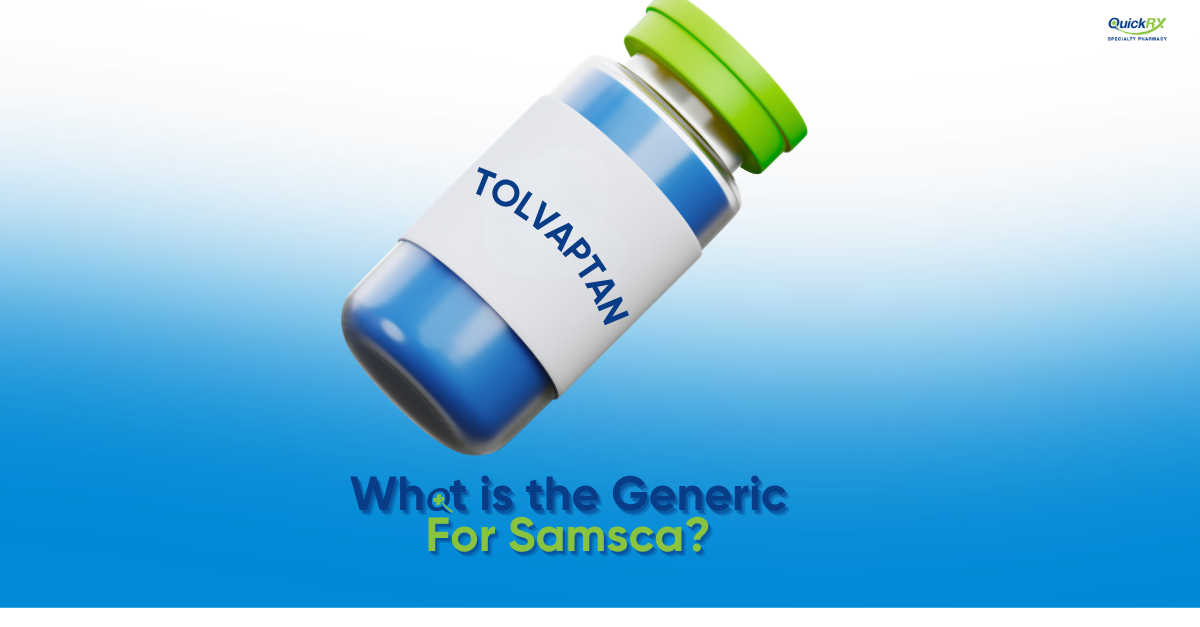
The generic name for Samsca is tolvaptan. When you see “tolvaptan” listed on your prescription, your pharmacy paperwork, or your medication bottle, it refers to the same active ingredient found in Samsca. Brand names and generic names often appear together — for example, you may see it written as “Samsca (tolvaptan)” or “tolvaptan (Samsca).”
How Does Tolvaptan Work?
Tolvaptan belongs to a class of medications called selective vasopressin V2-receptor antagonists. Vasopressin is a hormone produced by the brain that signals the kidneys to hold on to water. In conditions like hyponatremia and ADPKD, this water-retention signal can become problematic.
Tolvaptan works by blocking vasopressin’s effect at the V2 receptor in the kidneys. This causes the body to excrete excess water in the urine without losing electrolytes like sodium. In hyponatremia, this helps raise blood sodium levels back into a safer range. In ADPKD, slowing the water-retention signaling helps reduce the rate of cyst growth.
Is There a Generic Version of Samsca Available?
Tolvaptan is the generic name, and generic tolvaptan tablets have become available in the United States. However, because Samsca is dispensed under a restricted distribution program (REMS) due to its boxed warning, availability of generic tolvaptan for the hyponatremia indication may be limited to specific specialty pharmacies. Your prescriber and pharmacist will guide you to the appropriate option based on your insurance, your condition, and what’s available.
How Is Samsca Taken?
Samsca is an oral tablet, typically started in a hospital setting so your healthcare team can closely monitor your sodium levels during the initial doses. Rapid correction of sodium can be dangerous, so the first doses are always given under medical supervision. After that, your prescriber will determine the appropriate ongoing dose and monitoring schedule.
Important: Never stop, start, or change the dose of Samsca without your prescriber’s guidance. Always take it exactly as prescribed and follow all instructions from your specialty pharmacist.
Need help understanding your Samsca prescription?
Our pharmacy team can answer questions about how Samsca (tolvaptan) is dispensed and what to expect.
Managing Side Effects & Safety Monitoring
Samsca (tolvaptan) is an effective medication when used correctly, but it carries important safety considerations. Patients taking Samsca should be aware of both its boxed warning and its more common side effects, and should never skip the lab monitoring their prescriber orders.
The Boxed Warning: Liver Injury Risk
Samsca carries an FDA boxed warning — the strongest type of warning the FDA can require — for the risk of serious and potentially fatal liver injury. Because of this risk:
- Samsca should not be used for more than 30 days at a time for hyponatremia.
- It should not be used in patients with underlying liver disease, including cirrhosis.
- Liver function tests are required before starting treatment and during treatment.
- Stop the medication and contact your prescriber immediately if you notice signs of liver problems.
Signs of liver problems to watch for include:
- Yellowing of the skin or whites of the eyes (jaundice)
- Dark or tea-colored urine
- Pain or tenderness in the upper right side of the abdomen
- Persistent nausea or loss of appetite
- Unusual fatigue
- Itching that doesn’t go away
The REMS Program
Because of the liver-injury risk, Samsca is dispensed in the U.S. through a Risk Evaluation and Mitigation Strategy (REMS) program. This means:
- Only certified pharmacies can dispense it.
- Only certified prescribers can write the prescription.
- Patients must be enrolled in the REMS program.
- Liver function tests must be performed and documented at specific intervals.
If you’re being switched to Samsca, your healthcare team will walk you through enrollment and explain the lab schedule.
Common Side Effects of Samsca
In addition to the boxed warning, patients may experience more routine side effects. The most commonly reported include:
Increased Thirst and Frequent Urination
Because tolvaptan causes the kidneys to excrete more water, increased thirst and more frequent urination are expected. It’s important to drink water when you feel thirsty — restricting fluids while on tolvaptan can lead to dangerously rapid changes in sodium levels.
Dry Mouth
Dry mouth is common. Sipping water throughout the day, sugar-free lozenges, or saliva-substitute products may help. Talk to your dentist about long-term dry mouth, as it can affect dental health.
Nausea and Decreased Appetite
Some patients experience nausea, particularly when starting the medication. Taking Samsca at the same time each day and eating small, frequent meals may help. Persistent nausea — especially with other symptoms — should be reported to your prescriber, as it may signal a liver problem.
Weakness and Fatigue
Generalized weakness or fatigue can occur. Sudden or worsening fatigue should always be discussed with your healthcare provider.
Constipation
Mild constipation is possible. Adequate hydration (drinking when thirsty), dietary fiber, and gentle physical activity can help. If constipation persists, ask your pharmacist before using over-the-counter laxatives, as some interact with kidney function.
Elevated Blood Sodium
Because tolvaptan can raise sodium levels significantly, your prescriber will monitor your bloodwork to ensure sodium doesn’t rise too quickly or too high. Symptoms of high sodium can include excessive thirst, restlessness, or confusion.
Drug Interactions to Discuss with Your Pharmacist
Tolvaptan can interact with a number of other medications. Always provide your pharmacist with a complete list of everything you take, including over-the-counter medicines and supplements. Particular categories to mention include:
- Certain antifungal medications
- Some antibiotics
- Medications that affect potassium levels
- Other medications metabolized by the liver
- Grapefruit and grapefruit juice (which can affect how tolvaptan is processed by the body)
When to Call Your Doctor Right Away
🚨 Seek immediate medical attention if you experience:
- Yellowing of skin or eyes
- Severe or persistent abdominal pain
- Dark urine combined with light-colored stools
- Signs of severe dehydration (very little urination, dizziness, fainting)
- Confusion, seizures, or sudden severe weakness
- Signs of an allergic reaction (rash, swelling of face or throat, trouble breathing)
Routine side effects can usually be managed with simple steps and good communication with your healthcare team. Don’t hesitate to call your specialty pharmacist with questions — that’s what we’re here for.
Understanding the Cost of Samsca
Samsca is classified as a specialty medication, which means it’s typically more expensive than a standard prescription. The exact out-of-pocket cost depends on your insurance plan, your deductible, your pharmacy benefit, and whether you qualify for any assistance programs.
What Affects the Price?
Several factors influence what a patient actually pays for Samsca or generic tolvaptan, including:
- Your insurance formulary tier — Samsca is often placed on a specialty tier, which can have higher copays.
- Whether your plan requires prior authorization — most do for specialty medications.
- Whether you have met your annual deductible.
- Whether you have access to manufacturer or foundation assistance programs.
- The dosage and quantity prescribed.
Brand vs. Generic Tolvaptan
Generic tolvaptan tablets exist, but because of the REMS program requirements, generic availability can vary. Your prescriber and specialty pharmacist will help determine which option is right for you based on your insurance coverage and clinical needs.
How Patients Afford Samsca
Most patients on specialty medications like Samsca rely on a combination of insurance coverage and assistance programs to make treatment affordable. These can include manufacturer copay programs, independent nonprofit foundations, and dedicated specialty pharmacy support to help navigate the paperwork.
For specific information about copay assistance programs, patient support, and how QuickRx Specialty Pharmacy can help coordinate your Samsca prescription, visit our Samsca Copay Assistance page.
Questions about affording your Samsca prescription?
Our patient navigators help patients understand their options.
Living with Hyponatremia or ADPKD
Managing a chronic condition like hyponatremia or ADPKD goes beyond taking a medication on schedule. Long-term success depends on building a strong relationship with your healthcare team and developing daily habits that support your treatment.
Stay Connected to Your Care Team
Both conditions require ongoing monitoring. Keep your scheduled lab appointments — particularly liver function tests while on Samsca — and report new symptoms early. Your prescriber, nephrologist (kidney specialist), and specialty pharmacist all play a role in your care, and clear communication between them makes a real difference.
Track Symptoms and Hydration
Many patients find it helpful to keep a simple daily journal of how they feel, how much they’re drinking and urinating, and any new symptoms. This information can be invaluable at follow-up visits.
Don’t Restrict Fluids Without Guidance
While on tolvaptan, drinking when you’re thirsty is essential. Restricting fluids can lead to dangerously rapid changes in sodium levels. Your prescriber will give you specific hydration guidance based on your condition.
Lean on Reliable Resources
Trusted educational resources for these conditions include the National Kidney Foundation, the National Institute of Diabetes and Digestive and Kidney Diseases (NIDDK), and your nephrologist’s office. Avoid unverified online sources or social media advice when it comes to medication decisions.
Frequently Asked Questions
What is the generic name for Samsca?
The generic name for Samsca is tolvaptan. Samsca is the brand name, and tolvaptan is the active ingredient inside the tablet. They refer to the same medication, though Samsca is dispensed only through a restricted REMS program in the United States.
Is there a generic version of Samsca available?
Generic tolvaptan tablets do exist, but because Samsca is dispensed through a restricted distribution program (REMS), generic availability for the hyponatremia indication may be limited to specific specialty pharmacies. Your prescriber and pharmacist can tell you what’s available for your specific situation.
What conditions does Samsca treat?
Samsca is FDA-approved to treat clinically significant hyponatremia (low blood sodium) associated with conditions like heart failure, cirrhosis, and SIADH. A different brand of tolvaptan, Jynarque, is approved separately for autosomal dominant polycystic kidney disease (ADPKD).
How does tolvaptan work?
Tolvaptan is a selective vasopressin V2-receptor antagonist. It blocks a hormonal signal that tells the kidneys to retain water, which allows the body to excrete excess water without losing electrolytes. This helps raise blood sodium levels in hyponatremia and slows cyst-related water dynamics in ADPKD.
Why does Samsca have a boxed warning?
Samsca carries an FDA boxed warning because it has been linked to serious, and in rare cases fatal, liver injury. For this reason, treatment duration is limited, patients with liver disease should not take it, and regular liver function tests are required.
What is the REMS program for Samsca?
The Risk Evaluation and Mitigation Strategy (REMS) program is a safety system required by the FDA for medications with significant risks. For Samsca, the REMS program ensures that only certified prescribers and certified pharmacies handle the medication, and that patients receive proper liver-function monitoring throughout treatment.
Can I drink water normally while taking Samsca?
Yes — and in fact, you should drink when you’re thirsty. Restricting fluids while on tolvaptan can cause sodium to rise too quickly, which is dangerous. Always follow your prescriber’s specific hydration instructions.
What are the most common side effects of Samsca?
The most common side effects include increased thirst, frequent urination, dry mouth, nausea, constipation, weakness, and elevated blood sodium. Most are manageable with simple steps, but any sign of liver problems should be reported to your prescriber immediately.
Is Samsca the same as Jynarque?
Both Samsca and Jynarque contain the same active ingredient — tolvaptan — but they are approved for different conditions and dosed differently. Samsca is approved for hyponatremia; Jynarque is approved for ADPKD. They are not interchangeable.
How much does Samsca cost?
Samsca is a specialty medication, and the out-of-pocket cost varies widely depending on your insurance plan, deductible, and access to assistance programs. For specific information about copay assistance and affordability options, visit our Samsca Copay Assistance page or call our pharmacy team at (917) 830-2525.
Does insurance cover Samsca?
Most insurance plans cover Samsca, but it is typically placed on a specialty tier and usually requires prior authorization. The specialty pharmacy filling your prescription can help coordinate the prior authorization process and verify your benefits.
Can I get help paying for Samsca?
Yes — many patients qualify for some form of financial assistance, including manufacturer copay programs and independent foundation grants. A specialty pharmacy can help walk you through what’s available and assist with applications. Visit our Samsca Copay Assistance page for more information.
References
- U.S. Food and Drug Administration (FDA). Samsca (tolvaptan) Prescribing Information. www.fda.gov
- National Institute of Diabetes and Digestive and Kidney Diseases (NIDDK). Polycystic Kidney Disease. www.niddk.nih.gov
- National Library of Medicine. Tolvaptan — Drug Information. PubMed Bookshelf
- Mayo Clinic. Hyponatremia — Symptoms and Causes. www.mayoclinic.org
- National Library of Medicine. LiverTox: Clinical and Research Information on Drug-Induced Liver Injury — Tolvaptan. PubMed Bookshelf
- National Kidney Foundation. About ADPKD. www.kidney.org
✍️ Author: Paola Larrabure, Pharma Content Manager, QuickRx Specialty Pharmacy
✅ Medically Reviewed by: Julia Kravtsova, PharmD, Head Patient Navigator, QuickRx Specialty Pharmacy
Last reviewed: May 2026