
⚠️ IMPORTANT MEDICAL DISCLAIMER
This article provides general health information about mammogram screening and is not a substitute for professional medical advice, diagnosis, or treatment. Always consult your healthcare provider before making decisions about cancer screening. If you have concerns about breast health or notice any changes, contact your doctor immediately. QuickRx Specialty Pharmacy does not provide medical advice or treatment recommendations.
The Question Millions of Women Are Asking
Every year, nearly 40 million mammograms are performed in the United States alone. Yet despite decades of use, one question continues to surface in doctor’s offices, online forums, and family conversations: Are mammograms actually safe?
It’s a fair question. After all, mammograms use radiation—and we’ve all heard that radiation can cause cancer. So how can a test that uses radiation be safe for detecting cancer?
Here’s the short answer: Yes, mammograms are safe. The radiation exposure is extremely low, the technology has improved dramatically, and the benefits of early breast cancer detection far outweigh the minimal risks for most women.
However, the complete answer requires understanding the science, the numbers, and how to make informed decisions about your own screening schedule. Throughout this guide, we’ll break down everything you need to know about mammogram safety—backed by current research and expert guidelines.
Get Copay Assistance
Diagnosed with breast cancer and worried about treatment costs? QuickRx Specialty Pharmacy helps patients access copay assistance for breast cancer medications like Ibrance, Verzenio, Kisqali, and Herceptin. Call (917) 830-2525 or (800) 496-6111 to learn about your options.
📋 KEY FACTS AT A GLANCE
- Radiation dose: 0.4 millisieverts (mSv) per screening—equivalent to 7 weeks of natural background radiation
- Cancer risk from mammogram: Approximately 1 in 1,000 women screened annually from age 40-80 may develop radiation-induced breast cancer
- Lives saved: Mammograms reduce breast cancer mortality by 20-40% in women who get regular screenings
- False positive rate: About 10% of mammograms require follow-up testing; most are not cancer
- Current guidelines: Most organizations recommend screening every 1-2 years starting at age 40-50
- 3D mammograms: Similar or slightly higher radiation but better cancer detection and fewer false positives
📑 TABLE OF CONTENTS
- What Exactly Is a Mammogram?
- How Much Radiation Is in a Mammogram?
- Can Mammogram Radiation Cause Cancer?
- Are Digital and 3D Mammograms Safer?
- What About False Positives and Overdiagnosis?
- Are Mammograms Safe During Pregnancy?
- Are Mammograms Safe with Breast Implants?
- How Often Should You Get a Mammogram?
- Do the Benefits Outweigh the Risks?
- Frequently Asked Questions
- The Bottom Line on Mammogram Safety
What Exactly Is a Mammogram?
Before diving into safety concerns, it’s essential to understand what a mammogram actually does. Essentially, a mammogram is a specialized X-ray of the breast tissue designed to detect cancer and other abnormalities—often before they can be felt during a physical exam.
How Does a Mammogram Work?
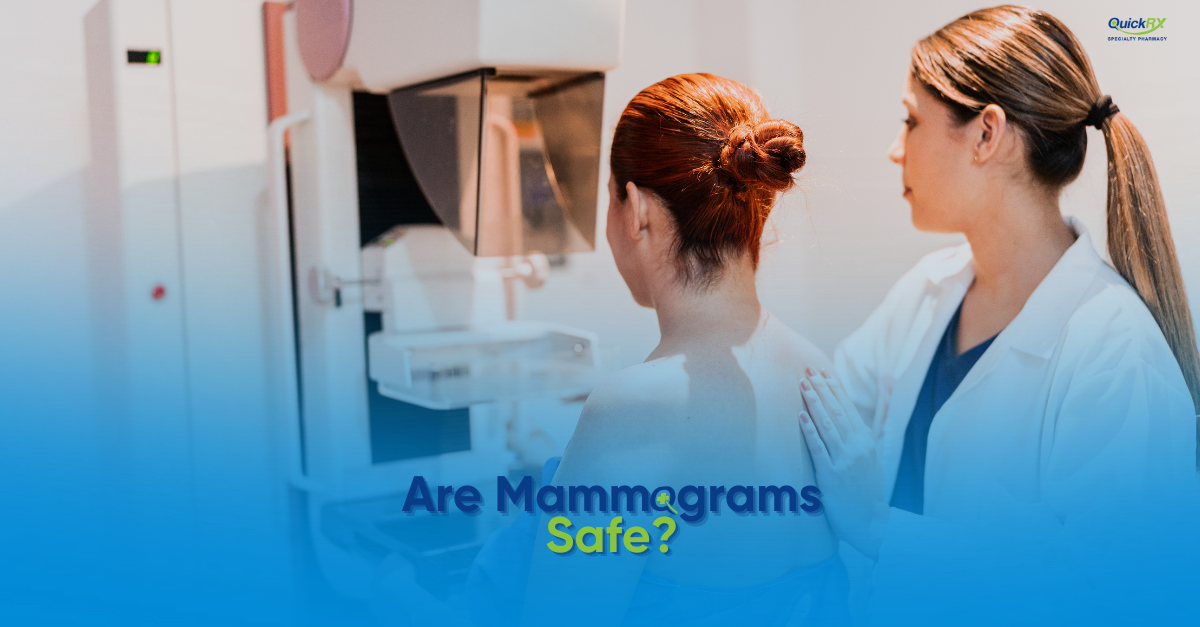
During a mammogram, your breast is placed on a flat surface and gently compressed with a clear plastic plate. This compression serves several important purposes:
- First, it spreads the breast tissue so overlapping structures don’t hide potential abnormalities
- Second, it holds the breast still to prevent motion blur
- Third, it allows a lower radiation dose to be used since the X-rays travel through less tissue
- Finally, it creates more uniform images for accurate interpretation
The entire process typically takes about 20 minutes, with each breast compressed for only a few seconds at a time. While the compression can be uncomfortable, it’s a crucial part of getting accurate results.

Types of Mammograms
There are two main categories of mammograms:
Screening mammograms: These are routine exams for women with no symptoms. They typically involve two X-ray images of each breast and are designed to catch cancer early.
Diagnostic mammograms: These are more detailed exams used when something suspicious is found during a screening mammogram, or when a woman has symptoms like a lump, pain, or nipple discharge. They may involve additional images from different angles.
How Much Radiation Is in a Mammogram?
This is the question at the heart of most mammogram safety concerns. After all, radiation exposure is a legitimate health consideration. However, when you understand the actual numbers, the picture becomes much clearer.
The Numbers in Perspective
According to the U.S. Food and Drug Administration (FDA), a standard screening mammogram delivers approximately 0.4 millisieverts (mSv) of radiation.
To put this in perspective, here’s how mammogram radiation compares to other common exposures:
| Radiation Source | Dose (mSv) | Comparison |
|---|---|---|
| Screening mammogram | 0.4 mSv | Baseline |
| Chest X-ray | 0.1 mSv | 4x less than mammogram |
| Round-trip cross-country flight | 0.03 mSv | 13x less than mammogram |
| Annual natural background radiation | 3.0 mSv | 7.5x more than mammogram |
| CT scan of abdomen | 10 mSv | 25x more than mammogram |
In other words, a single mammogram exposes you to roughly the same amount of radiation you’d receive from about 7 weeks of everyday living—from the sun, the ground, building materials, and even the food you eat.

Why Mammogram Radiation Is So Low
Several factors contribute to the low radiation dose in modern mammograms:
- Advanced digital detectors require less radiation to produce clear images
- Breast compression reduces the amount of tissue X-rays must penetrate
- Strict FDA regulations mandate regular equipment testing and dose monitoring
- Technologists are trained to minimize repeat images
Can Mammogram Radiation Cause Cancer?
Here’s where we need to be completely honest: Yes, radiation can theoretically cause cancer. This is a scientific fact. However, the risk from mammogram radiation is extraordinarily small—and understanding this risk in context is crucial.
What the Research Shows
According to the National Cancer Institute, the risk of developing breast cancer from mammogram radiation is estimated at approximately 1 case per 1,000 women who are screened annually from age 40 to 80.
Meanwhile, 1 in 8 women (about 13%) will develop breast cancer during their lifetime from other causes.
To illustrate this further:
- If 1,000 women get annual mammograms from age 40-80, approximately 1 might develop radiation-induced breast cancer
- Those same mammograms would detect approximately 50-60 breast cancers early enough to improve outcomes
- Early detection reduces breast cancer mortality by 20-40%
Who Might Be at Higher Risk?
Certain factors may increase sensitivity to radiation:
- BRCA1/BRCA2 gene mutations: Some research suggests women with these mutations may be more sensitive to radiation. However, these women also have significantly higher breast cancer risk, making screening even more important.
- Previous chest radiation: Women who received radiation therapy to the chest (such as for Hodgkin lymphoma) before age 30 may have increased risk and should discuss alternative screening options with their doctors.
- Very young age: Breast tissue is more sensitive to radiation during development, which is one reason routine mammograms aren’t recommended for women under 40 without specific risk factors.
For the vast majority of women, however, the minimal radiation exposure from mammograms poses no significant health threat.
Are Digital and 3D Mammograms Safer?
Technology has transformed mammography over the past two decades. Understanding these advancements can help you make informed decisions about your screening options.
Digital Mammography: The Current Standard
Digital mammograms have largely replaced traditional film mammograms in the United States. According to the American College of Radiology, digital mammography offers several advantages:
- Slightly lower radiation doses compared to film
- Better image quality, especially for women with dense breasts
- Images can be enhanced, magnified, and stored electronically
- Faster results and easier sharing between healthcare providers
3D Mammography (Tomosynthesis): The Latest Advancement
Three-dimensional mammography, also called digital breast tomosynthesis (DBT), takes multiple X-ray images from different angles and creates a 3D picture of the breast.
Radiation comparison:
- 2D digital mammogram: ~0.4 mSv
- 3D mammogram alone: ~0.4-0.5 mSv
- Combined 2D + 3D: ~0.6-0.8 mSv (some facilities do both)
While 3D mammograms may involve slightly more radiation when combined with 2D imaging, the benefits are significant:
- Better cancer detection: Studies show 3D mammography finds 20-65% more invasive cancers than 2D alone
- Fewer false positives: Recall rates drop by 15-40%, meaning fewer women need anxiety-inducing follow-up tests
- Especially helpful for dense breasts: 3D imaging can “see through” dense tissue more effectively
Many newer machines now use “synthesized 2D” images created from the 3D data, eliminating the need for a separate 2D exposure and keeping radiation doses similar to standard mammograms.

Photo by Craig Cameron on Unsplash
Get Copay Assistance
What About False Positives and Overdiagnosis?
Radiation isn’t the only safety concern women have about mammograms. Two other issues deserve attention: false positives and overdiagnosis.
Understanding False Positives
A false positive occurs when a mammogram shows something suspicious that turns out not to be cancer after additional testing. This is relatively common:
- About 10% of screening mammograms result in a callback for additional imaging
- Of those callbacks, only about 5% result in a biopsy recommendation
- Of those biopsies, approximately 20-40% find cancer
In other words, most “abnormal” mammograms don’t indicate cancer. However, the waiting period and additional tests can cause significant anxiety. This is a real consideration when weighing the benefits of screening.
The Overdiagnosis Debate
Overdiagnosis refers to detecting cancers that would never have caused symptoms or death if left undetected. Some slow-growing cancers might never become life-threatening, but once found, they’re typically treated.
Estimates of overdiagnosis rates vary widely—from 1% to 50% depending on the study methodology. The American Cancer Society acknowledges this issue while maintaining that the benefits of screening outweigh the harms for most women.
Currently, there’s no reliable way to determine which detected cancers would have become dangerous. Therefore, most healthcare providers recommend treating all detected cancers appropriately.
Are Mammograms Safe During Pregnancy?
This is a common and important question for expectant mothers who may need breast evaluation.
The Official Guidance
According to the American College of Obstetricians and Gynecologists (ACOG), mammograms can be performed safely during pregnancy when medically necessary.
Important considerations include:
- Minimal fetal exposure: The radiation from a mammogram is directed at the breast, not the abdomen. With proper shielding, fetal radiation exposure is negligible.
- Medical necessity: Routine screening mammograms are typically postponed during pregnancy, but diagnostic mammograms (to evaluate a lump or other concern) should not be delayed.
- Breast changes: Pregnancy causes significant breast tissue changes that can make mammograms harder to interpret. Ultrasound is often used first for pregnant women with breast concerns.
What to Do If You Need Breast Evaluation During Pregnancy
If you notice a breast lump or other concerning change during pregnancy:
- Don’t wait—contact your healthcare provider immediately
- Ultrasound is typically the first imaging choice during pregnancy
- Mammograms can be safely performed if needed, with abdominal shielding
- MRI without contrast may also be considered in certain situations
Breast cancer during pregnancy is rare but does occur. Early evaluation of any concerning symptoms is crucial regardless of pregnancy status.
Are Mammograms Safe with Breast Implants?
Women with breast implants often wonder whether mammograms could damage their implants or whether screening is still effective.
Safety for the Implants
Modern mammography is generally safe for breast implants:
- The compression used is gentler than many women expect
- Implant rupture from mammography is extremely rare
- Technologists are trained in special techniques for imaging augmented breasts
Effectiveness of Screening
However, implants can affect mammogram accuracy:
- Implants can obscure some breast tissue, potentially hiding abnormalities
- Additional views (called “implant displacement” or “Eklund” views) are typically needed
- The exam takes longer and involves more images
Despite these limitations, mammograms remain recommended for women with implants. Be sure to inform the facility about your implants when scheduling, and choose a center experienced in imaging augmented breasts.
How Often Should You Get a Mammogram?
Screening guidelines have evolved over time and vary slightly between organizations. Here’s what major medical organizations currently recommend:
Current Screening Guidelines (2024-2025)
| Organization | When to Start | Frequency |
|---|---|---|
| U.S. Preventive Services Task Force (USPSTF) | Age 40 | Every 2 years |
| American Cancer Society | Age 40-44 (optional), 45+ (recommended) | Annual 45-54, then every 1-2 years |
| American College of Radiology | Age 40 | Every year |
| National Comprehensive Cancer Network | Age 40 | Every year |
Who Might Need Earlier or More Frequent Screening?
Some women should begin screening before age 40 or get screened more frequently:
- Family history: First-degree relative (mother, sister, daughter) with breast cancer
- Genetic mutations: BRCA1, BRCA2, or other hereditary cancer syndromes
- Previous chest radiation: Especially if received before age 30
- Dense breast tissue: May benefit from additional screening methods
- Personal history: Previous breast cancer, atypical hyperplasia, or LCIS
Discuss your individual risk factors with your healthcare provider to determine the best screening schedule for you.

Photo by National Cancer Institute on Unsplash
Do the Benefits Outweigh the Risks?
After examining the evidence, here’s how the risks and benefits of mammography stack up:
The Benefits
- Lives saved: Regular mammography screening reduces breast cancer mortality by 20-40%
- Earlier detection: Mammograms can find cancers 1-4 years before they’d be felt as a lump
- Less aggressive treatment: Cancers found early often require less extensive surgery and may not need chemotherapy
- Better survival: Five-year survival for localized breast cancer is 99%; for distant-stage cancer, it’s 31%
- Peace of mind: Normal results provide reassurance
The Risks
- Radiation exposure: Very low dose; theoretical cancer risk is approximately 1 in 1,000 over a lifetime of screening
- False positives: About 50% of women screened annually for 10 years will have at least one false positive
- Overdiagnosis: Some detected cancers might never have become life-threatening
- Discomfort: Breast compression can be temporarily uncomfortable
- Anxiety: Waiting for results or callbacks can cause stress
The Verdict
For most women over 40, the benefits of mammography clearly outweigh the risks. The American Cancer Society, National Cancer Institute, and most major medical organizations continue to recommend regular screening because early detection saves lives.
However, mammography isn’t perfect, and the decision to screen should be made individually with your healthcare provider, considering your personal risk factors, values, and preferences.
Get Copay Assistance
Frequently Asked Questions About Mammogram Safety
How painful is a mammogram?
Most women describe mammograms as uncomfortable rather than painful. The breast compression lasts only a few seconds per image. Scheduling your mammogram for the week after your period (when breasts are less tender) can help reduce discomfort. Additionally, taking over-the-counter pain medication an hour before your appointment may help if you’re concerned.
Can mammograms detect all breast cancers?
Unfortunately, no. Mammograms detect approximately 85% of breast cancers. Some cancers—particularly in women with dense breasts—may not be visible on mammography. This is why clinical breast exams and breast self-awareness remain important, and why some women may benefit from additional screening methods like ultrasound or MRI.
Are mammograms safe if I’m breastfeeding?
Yes, mammograms can be performed safely while breastfeeding. However, lactating breast tissue is denser and can be harder to interpret. Your healthcare provider may recommend nursing or pumping right before your mammogram to reduce breast density. Be sure to inform the technologist that you’re breastfeeding.
Do mammograms cause cancer to spread?
No. This is a myth. The compression used during mammography does not cause cancer to spread. There is no scientific evidence supporting this concern. In fact, mammograms help detect cancer early, when treatment is most effective.
How long do I wait for mammogram results?
Most women receive results within 1-2 weeks. Many facilities now offer same-day results for screening mammograms. If you’re called back for additional imaging, try not to panic—most callbacks result in findings that are not cancer.
Is there an alternative to mammograms?
For most women, mammography remains the gold standard for breast cancer screening. However, alternatives and supplements include:
- Breast ultrasound: Often used as a supplement for women with dense breasts
- Breast MRI: Recommended for high-risk women; very sensitive but expensive and may have more false positives
- Molecular breast imaging: Uses a radioactive tracer; may be helpful for dense breasts
- Thermography: Not recommended as a screening tool by major medical organizations due to limited evidence
Discuss with your healthcare provider which screening approach is best for your individual situation.
What if I can’t afford a mammogram?
Several programs help women access affordable or free mammograms:
- CDC’s National Breast and Cervical Cancer Early Detection Program: Provides free or low-cost screenings
- Medicare: Covers annual screening mammograms for women 40 and older
- Medicaid: Coverage varies by state but often includes mammograms
- Local health departments: Many offer free screening programs
- Nonprofit organizations: Susan G. Komen and others provide financial assistance
The Bottom Line: Are Mammograms Safe?
Yes, mammograms are safe for most women. Here’s what the evidence tells us:
- The radiation dose is very low—equivalent to about 7 weeks of natural background exposure
- The theoretical cancer risk from mammogram radiation is approximately 1 in 1,000 over a lifetime
- Meanwhile, mammograms detect cancers early and reduce breast cancer mortality by 20-40%
- Modern digital and 3D technology has improved both safety and accuracy
- False positives and anxiety are real concerns but can be managed with information and support
The question isn’t really “Are mammograms safe?” but rather “Do the benefits outweigh the risks for me?” For most women over 40, the answer is clearly yes.
Talk with your healthcare provider about your personal risk factors, when to start screening, and how often to be screened. Together, you can make an informed decision that’s right for your health.
Facing a breast cancer diagnosis? QuickRx Specialty Pharmacy helps patients navigate the complex world of cancer medications and copay assistance programs. We can help you access financial assistance for medications like Xeloda (Capecitabine), Tykerb (Lapatinib), Fareston (Toremifine), and many others. Call (917) 830-2525 or (800) 496-6111 to learn how we can help reduce your out-of-pocket costs.
Medical References & Sources
- National Cancer Institute. Mammograms Fact Sheet. Accessed December 2025.
- U.S. Food and Drug Administration. Mammography. Accessed December 2025.
- American Cancer Society. Mammograms for Breast Cancer Screening. Accessed December 2025.
- American College of Radiology. Breast Imaging Resources. Accessed December 2025.
- U.S. Preventive Services Task Force. Breast Cancer Screening Recommendations. 2024 Update.
- American College of Obstetricians and Gynecologists. Breast Cancer Risk Assessment and Screening in Average-Risk Women. Accessed December 2025.
- Yaffe MJ, Mainprize JG. Risk of radiation-induced breast cancer from mammographic screening. Radiology. 2011;258(1):98-105.
- Friedewald SM, et al. Breast cancer screening using tomosynthesis in combination with digital mammography. JAMA. 2014;311(24):2499-2507.
- Nelson HD, et al. Effectiveness of breast cancer screening: systematic review and meta-analysis. Ann Intern Med. 2016;164(4):244-255.
- Cleveland Clinic. Mammogram: Purpose, Procedure & What to Expect. Accessed December 2025.
Disclaimer: This article provides general health information about mammogram screening and is intended for educational purposes only. It is not a substitute for professional medical advice, diagnosis, or treatment. Individual screening decisions should be made in consultation with a qualified healthcare provider who can assess your personal risk factors and health history. QuickRx Specialty Pharmacy does not provide medical advice, diagnosis, or treatment recommendations.
Last Updated: December 2025
Written By: Paola Larrabure, Pharma Content Manager, QuickRx Specialty Pharmacy
Reviewed By: Julia Kravtsova, PharmD, Head Patient Navigator, QuickRx Specialty Pharmacy