
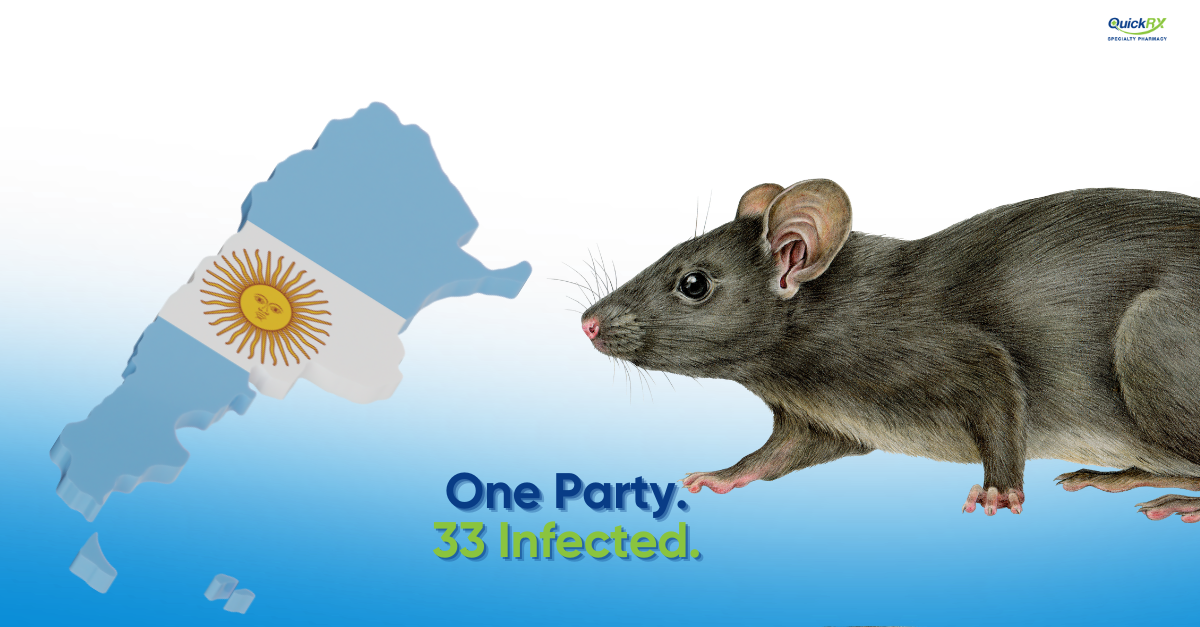
Epuyén, Argentina. November 3, 2018. A small village of about 3,000 people tucked into the foothills of Patagonia, where the Andes start to rise toward the Chilean border. A birthday party is in full swing — about 100 guests, neighbors and friends, the kind of gathering where everyone knows everyone.
A 68-year-old man arrives. He has been feeling off. Maybe a low fever, the early ache that feels like the start of a cold. Nothing alarming. He stays for ninety minutes.
During those ninety minutes, he sits at a table. Two people are within arm’s reach of him — close enough to pass a plate, close enough to lean in for a story. Two more sit at the next table over, about four feet away. All four will be infected before the night is over.
But it is the fifth person that scientists, two years later, would find almost impossible to believe.
He never sat with them. He never shared a drink, a hug, a chair. He passed the man in the hallway on the way to the bathroom. They exchanged a single word — “Hola.” A nod. A second, maybe two. Then he kept walking.
Within weeks, he was in the hospital fighting for his breath, his lungs filling with fluid as the Andes hantavirus tore through them. He was one of 34 people in the village who would fall ill. Eleven of them would die.
And no one — not the doctors, not the families, not the world’s leading hantavirus experts — had ever seen the virus behave like that before.
This is the story of how a tiny Patagonian village rewrote what science knew about a rare, deadly virus — and why, seven years later, that story is what is keeping a cruise ship full of stranded passengers from becoming a disaster.

First, what is hantavirus?
Hantavirus is a rare illness carried by rodents — mice and rats. People usually catch it by breathing in tiny particles from infected rodent urine, droppings, or saliva, often when cleaning out spaces where rodents have been living. Cabins, sheds, basements, garages, attics. Most people who get infected were nowhere near another person when it happened.
In the United States, almost all hantavirus cases come from a strain called Sin Nombre virus, carried by deer mice. It cannot spread from person to person. You catch it from a rodent, you can’t pass it to your spouse, your kids, or your doctor. Public-health experts call this a “dead-end” infection.
The Andes strain is the exception — and it is the one in the news right now. Found in southern Argentina and Chile, the Andes strain is the only hantavirus on Earth known to spread from human to human. Until 2018, scientists believed that even Andes hantavirus needed close, prolonged contact to pass between people. A nurse who didn’t wear a mask while suctioning a patient’s airway, maybe. A spouse sharing a bed for weeks.
Then came the birthday party in Epuyén. Here is exactly what happened, and how scientists pieced it together.
Andes hantavirus · A true story
The 90 minutes that changed what we knew about hantavirus
In the small Patagonian village of Epuyén, a single fever turned a birthday party into one of the most studied outbreaks in modern medicine — and gave the world the playbook now being used on the MV Hondius cruise ship in 2026.
A 68-year-old man is silently infected
Somewhere near his home in Epuyén — a village of about 3,000 in Argentina’s Chubut Province, near the Chilean border — a 68-year-old man comes into contact with rodent urine, droppings, or saliva. The carrier: the long-tailed pygmy rice rat, native to Patagonia. He doesn’t know he has been infected with the Andes strain of hantavirus. He won’t feel sick for weeks.
Spillover event · rodent to human
The fever, then the birthday party
The man wakes up feeling off — a low fever, a body ache, the early shape of what feels like a cold. He goes to a birthday party anyway. About 100 guests. Neighbors and friends. He stays for 90 minutes. Scientists will later piece together everything that happened in that room: where he sat, who he passed, who said hello to him on the way to the bathroom.
A hallway. A nod. “Hola.”
Two of the people he infects are sitting within arm’s reach of him at the table. Two more are sitting at the next table over, about four feet away. But the fifth person never sat with him. They cross paths in the hallway on the way to the bathroom. They exchange a single word: “Hola.” A nod. A second, maybe two. Then they keep walking. That brief greeting becomes one of the most carefully documented transmission events in hantavirus history.
Brief contact transmission documented
The pneumonia begins
In the days and weeks after the party, guests begin showing up at the local rural hospital with high fevers, body aches, headache, and shortness of breath that gets worse fast. Their lungs are filling with fluid. Several go straight to intensive care. Doctors recognize the pattern: hantavirus pulmonary syndrome — a serious, sometimes fatal illness that affects the heart and lungs.
Hantavirus pulmonary syndrome
The second super-spreader: an “active social life”
A 61-year-old man who had been at the party falls ill. The published study describes him simply as having an “active social life.” Before he is hospitalized, he infects six other people. He dies 16 days after his first symptom. His widow, also infected, will go on to attend his wake while running a fever — and infect ten more mourners in a single afternoon of grief.
Argentina locks down a village
By the time 18 cases are confirmed, Argentine health officials enforce isolation of every confirmed patient and self-quarantine for everyone they had been in contact with. Signs reading “No pasar” — “Do not enter” — appear on hospital doors. Photographs from January 2019 show a man in a surgical mask cycling alone down an empty Epuyén street. This is more than a year before any of us hears the word COVID.
Public health intervention
The outbreak ends — with two unforgettable numbers
By February 2019, the outbreak has been contained. The final tally: 34 people infected, 11 deaths. But the most remarkable number is one that didn’t happen. More than 80 healthcare workers treated these patients at hospitals, often with little or no personal protective equipment. Not one of them was infected. That single fact — that the contagious window had already closed by the time patients reached the hospital — is the discovery that would, seven years later, give doctors confidence on the MV Hondius.
Published in the New England Journal of Medicine
Argentine scientists at the Malbrán Institute publish their full investigation in NEJM. They sequence the virus from 27 of the patients and reconstruct, contact by contact, exactly how it moved through the village. They prove that transmission happened on the very first day of fever — and that the contagious window was short, about a single day. The reproductive number (R) drops from 2.12 before isolation to 0.96 after. They had cracked it.
Alonso et al., NEJM 2020
The MV Hondius — and the playbook from Epuyén
A Dutch couple takes a four-month birdwatching trip through Chile, Uruguay, and Argentina. On April 1, 2026, they board the MV Hondius cruise ship in Ushuaia, the southernmost city in the world. April 11: the husband dies on board. By May, the ship is anchored off Cape Verde, Spain has refused to let it dock in Tenerife, and 17 Americans are among the passengers stranded at sea. But this time, scientists already have the playbook — written in Epuyén. Isolate symptomatic patients. Trace contacts. Trust the short fever window. The WHO assesses global risk as low.
The playbook works
What Epuyén taught the world about Andes hantavirus
The Argentine investigation, published in the New England Journal of Medicine in 2020, did three things that no previous hantavirus study had been able to do.
First, it proved super-spreaders exist. Three people in the Epuyén outbreak — the man at the birthday party, the man with the “active social life,” and his widow at his wake — were responsible for two-thirds of all the infections. The rest of the infected patients passed the virus to almost no one. That uneven pattern, where a small number of people drive most of the spread, is what scientists call super-spreading. It would become a household word two years later during the COVID-19 pandemic. Epuyén showed it for hantavirus first.
Second, it identified the contagious window. By tracing exactly when each patient developed a fever and when their contacts got sick, the researchers established that Andes hantavirus is most contagious on a single day — the very first day of fever. Before fever begins, the patient does not appear to spread the virus. After the contagious window closes, transmission becomes much harder. That short window is the entire reason that more than 80 healthcare workers in Epuyén could treat infected patients without any personal protective equipment and not get sick themselves. By the time patients reached the hospital, they were no longer contagious.
Third, it proved that isolation works. Before Argentine authorities enforced isolation of confirmed cases and quarantine of contacts, each infected person was passing the virus to about 2.12 other people on average. After isolation began, that number dropped to 0.96 — below the threshold of 1.0 needed to keep an outbreak growing. The outbreak ended.
That last finding is the one that matters most right now.
May 2026: the cruise ship the Canary Islands turned away
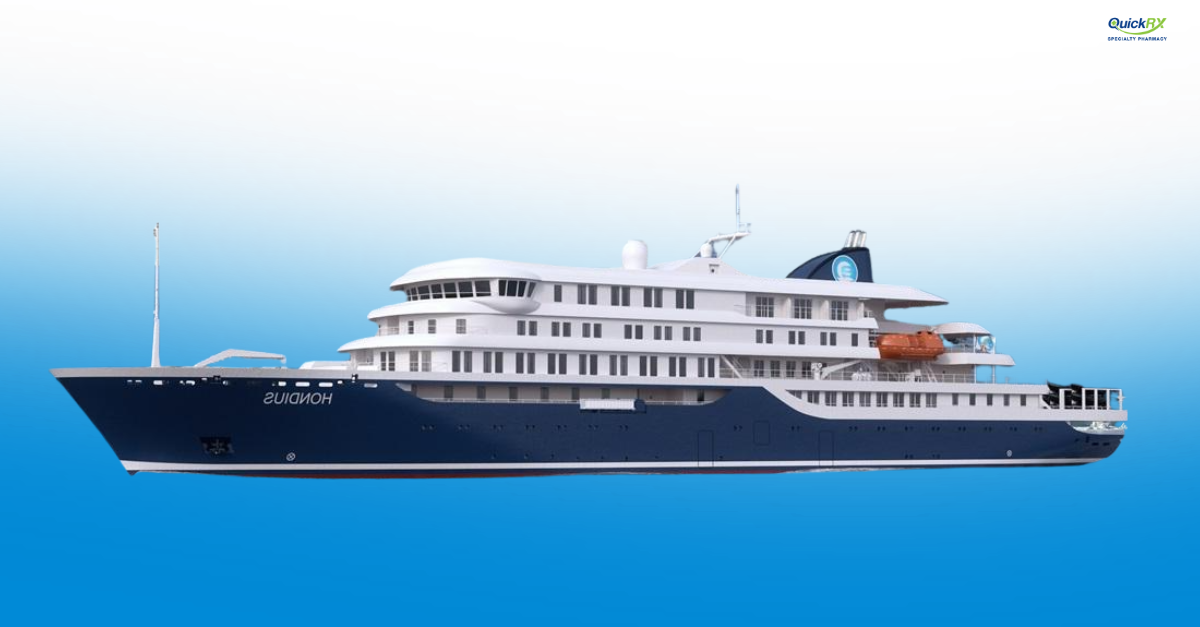
On April 1, 2026, the MV Hondius — a Dutch-flagged expedition cruise ship operated by Oceanwide Expeditions — left Ushuaia, the southernmost city in the world, with about 150 passengers and crew on board. Among them was a Dutch couple in their late 60s. They had spent the previous four months on a road trip through Chile, Uruguay, and Argentina, including stops at sites known to harbor the long-tailed pygmy rice rat. They had been birdwatching.
On April 11, ten days into the voyage, the husband woke up with a fever, headache, abdominal pain, and diarrhea. By the end of the day, he was dead. His body remained on board for two weeks before being removed at the British Overseas Territory of Saint Helena. About 30 to 40 passengers disembarked there as well, including the man’s wife. She boarded a flight from Johannesburg to Amsterdam but collapsed before takeoff and was removed from the plane. She died on April 26. A third passenger, a German national, has also died.
By early May, the ship was anchored off the coast of Praia, Cape Verde, with about 146 passengers and crew still on board. The president of the Canary Islands publicly refused to let the ship dock in Tenerife, citing concerns for the islanders’ safety after their experience with COVID-19. The WHO publicly disagreed, saying Spain has a moral and legal obligation to assist the passengers, several of whom are Spanish citizens. As of May 7, 2026, the ship is reported to be sailing toward Spain. Five hantavirus cases have been laboratory-confirmed. Seventeen of the passengers are American citizens, now spread across multiple states under monitoring by the CDC.
The reason WHO experts continue to assess the global risk as low — despite the dramatic headlines, the COVID comparisons, and the ship being turned away from a major port — comes back to Epuyén. Scientists already know how Andes hantavirus spreads. They know the contagious window. They know that isolation of symptomatic patients and quarantine of contacts brings the outbreak down. They know that healthcare workers wearing standard precautions are unlikely to be infected. They know what to do.
Should Americans be worried?
For the average person reading this in the United States, the honest answer is no — and that answer is grounded in science, not reassurance. Here is why.
The Andes strain of hantavirus is geographically limited to southern South America. The rodents that carry it do not live anywhere in the United States. The hantavirus that does occur in the United States — primarily Sin Nombre virus, carried by deer mice in the West and Southwest — cannot spread from person to person. American hantavirus cases come almost exclusively from cleaning up rodent-infested cabins, sheds, garages, and outbuildings.
The MV Hondius outbreak is an Andes virus event tied to two passengers who appear to have been exposed during a long birdwatching trip in rural South America. WHO has been clear that there is no evidence of widespread transmission risk and that the outbreak is not behaving like the early days of COVID-19. Public health authorities in the U.S., Canada, the U.K., the Netherlands, Singapore, and several other countries are tracing and monitoring the small number of disembarked passengers. That is exactly the playbook that Epuyén showed would work.
If you have not recently traveled in rural Patagonia, have not been on the MV Hondius, and have not been in close contact with someone who has, your personal risk from this outbreak is essentially zero. The basic, ordinary advice for preventing the U.S. form of hantavirus — ventilate enclosed spaces before cleaning, wet down rodent droppings rather than sweeping or vacuuming, wear gloves and a mask when cleaning rodent-prone spaces — is what it has always been.
Frequently asked questions about hantavirus
The following are the most common questions readers and patients have asked us about hantavirus and the 2026 outbreak.
What is hantavirus?
Hantavirus is a family of viruses carried by certain rodents, including deer mice in the United States and the long-tailed pygmy rice rat in southern South America. People typically catch it by inhaling tiny particles from infected rodent urine, droppings, or saliva — often when cleaning out enclosed spaces where rodents have been living. Most strains do not spread between people. The Andes strain, found only in southern Argentina and Chile, is the one exception known to medical science.
Is hantavirus contagious between humans?
Almost all hantaviruses, including every strain found in the United States, are not contagious between humans. The exception is the Andes strain, found in southern Argentina and Chile, which is the only hantavirus known to spread person to person. Even with the Andes strain, person-to-person transmission appears to be uncommon outside of close-contact situations during the patient’s contagious window.
What happened in Epuyén, Argentina in 2018?
In late 2018 and early 2019, the village of Epuyén in southern Argentina experienced an outbreak of Andes hantavirus that infected 34 people and killed 11. The outbreak was traced to a 68-year-old man who attended a birthday party while running a fever and infected five other people during 90 minutes there — including one person he passed only briefly in a hallway on the way to the bathroom. Argentine scientists later published a detailed reconstruction of the outbreak in the New England Journal of Medicine in 2020.
What is happening on the MV Hondius cruise ship?
In April 2026, an outbreak of Andes hantavirus was identified on the Dutch-flagged expedition cruise ship MV Hondius, which had departed Argentina with about 150 people on board. As of May 2026, three people have died and five cases have been laboratory-confirmed. The ship is being denied entry to several ports and is currently sailing toward Spain. Public health authorities in multiple countries are tracing and monitoring the passengers who disembarked at earlier stops. The WHO assesses the risk to the general public as low.
Is the MV Hondius outbreak similar to COVID-19?
No. According to the WHO, the MV Hondius outbreak is not behaving like COVID-19 and is not expected to cause a global pandemic. Andes hantavirus is a known virus with a documented contagious window of about one day, beginning with the onset of fever. Standard public health measures — isolation of symptomatic patients and quarantine of close contacts — have been shown to bring outbreaks under control. COVID-19 was a novel coronavirus capable of asymptomatic transmission, which made it far more difficult to contain.
What are the symptoms of hantavirus?
Early symptoms typically include fever, fatigue, body aches (especially in the thighs, hips, back, and shoulders), headache, dizziness, chills, and abdominal symptoms such as nausea, vomiting, or diarrhea. Within several days, more serious symptoms can develop, including shortness of breath and a cough as the lungs fill with fluid. Hantavirus pulmonary syndrome is a serious illness that requires immediate medical attention. The incubation period — the time between exposure and the first symptoms — can be as long as six weeks.
How can I prevent hantavirus?
For the form of hantavirus found in the United States, prevention focuses on reducing contact with rodent droppings, urine, and saliva. Seal openings where rodents could enter your home. Before cleaning a cabin, shed, garage, or other space that has been closed up, ventilate it for at least 30 minutes. Do not sweep or vacuum droppings, as this can put virus particles into the air. Instead, wet the area with a disinfectant, wear rubber or plastic gloves and a well-fitting mask, and wipe up the droppings with a damp paper towel. Wash your hands thoroughly afterward. The CDC has detailed guidance on safe rodent cleanup.
Is there a treatment for hantavirus?
There is no specific antiviral medication or vaccine approved for hantavirus pulmonary syndrome at this time. Treatment is supportive and is provided in a hospital setting, often in an intensive care unit. Patients may require supplemental oxygen, mechanical ventilation, and careful management of fluids and blood pressure. Early diagnosis and prompt hospital care substantially improve the chances of recovery. Anyone who has had a known exposure to rodents and develops fever, body aches, or shortness of breath should seek medical attention promptly and tell their provider about the possible exposure.
Sources and references
- Alonso DO, Iglesias A, Coelho R, et al. “Super-Spreaders” and Person-to-Person Transmission of Andes Virus in Argentina. N Engl J Med. 2020;383(23):2230-2241.
- World Health Organization. Hantavirus cluster linked to cruise ship travel, Multi-country. Disease Outbreak News, May 2026. Available at: who.int
- Centers for Disease Control and Prevention. Hantavirus Pulmonary Syndrome. Available at: cdc.gov/hantavirus
- CNN Health. What doctors know about how the Andes hantavirus spreads. May 6, 2026.
- Agence France-Presse. Past hantavirus outbreak shows how Andes virus spreads. May 7, 2026.
- Live Science. Hantavirus cruise: live updates on the MV Hondius cluster. May 7, 2026.
Important Medical Disclaimer: This article is intended for educational and informational purposes only and is not a substitute for professional medical advice, diagnosis, or treatment. Always consult a qualified healthcare provider with any questions you may have about a medical condition or potential exposure. If you are experiencing fever, shortness of breath, or other concerning symptoms after a possible rodent exposure or recent travel, contact your healthcare provider or local health department promptly. QuickRx Specialty Pharmacy is a licensed nationwide specialty pharmacy that provides medication dispensing and patient navigation services; we do not provide medical diagnosis or treatment recommendations.
Author: Paola Larrabure, Pharma Content Manager, QuickRx Specialty Pharmacy
Clinical Reviewer: Julia Kravtsova, PharmD, Head Patient Navigator
Last Clinically Reviewed: May 2026